The Armenia Color Font: A Tribute to Culture in Every Glyph
Visual Identity and Cultural Resonance
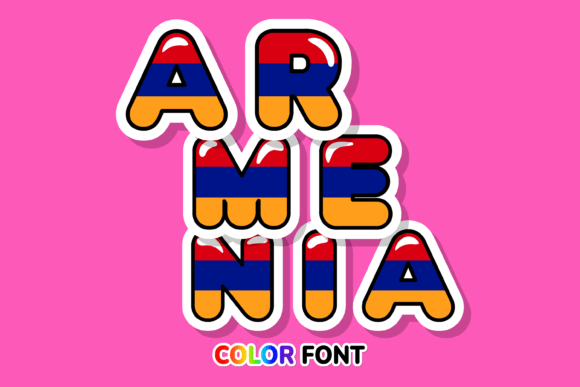
When you look at the Armenian flag, you see a story told through stripes: blue for peaceful skies, orange for courage and hard work, and red for the blood shed for freedom. The Armenia Color font captures this exact narrative. It is not just a collection of letters; it is a piece of modern typography that embodies national pride and cultural heritage. As a display font, it stands out immediately. The visual weight of the tricolor integration creates a bold statement that generic sans serif font families simply cannot replicate.
This typeface functions as a color font, specifically utilizing the OpenType-SVG format. This is a technical distinction that matters for designers. Unlike standard vector fonts where you manually apply gradients or fills, the Armenia font renders the textures and color blends directly within the glyph. This preserves the specific shading of the flag, ensuring that the orange blends naturally into the red or the blue maintains its depth. It provides a level of realism that traditional flat-color typography cannot achieve. For anyone looking to inject personality into a project, this font offers an immediate connection to Armenian identity without requiring complex layering in design software.
Practical Applications for Creators and Brands
Finding the right creative font is often about finding the right context. The Armenia font works best when it is the focal point of the design. Its complex color rendering makes it ideal for projects where typography acts as the primary visual element rather than just a vessel for information.
Consider the world of logo design and brand identity. If you are launching a product line that pays homage to the region—perhaps a wine label, a gourmet food package, or a cultural event—this font instantly signals authenticity. It saves the time usually spent manually coloring letters to match a theme. In packaging design, where shelf appeal is everything, the vibrant tricolors can catch the eye faster than a standard serif font.
For digital creators and social media graphics, the font shines in high-impact posts. Think of Instagram stories, YouTube thumbnails, or Facebook headers. These platforms demand attention, and the Armenia font delivers it. Because it is a premium font designed with high-resolution detail, it scales well for print-on-demand products. Imagine custom t-shirts, tote bags, or posters for community centers and cultural festivals. The font allows DIY crafters and small business owners to create professional-grade merchandise without needing advanced illustration skills.
It is also a strong candidate for editorial design headlines. A magazine cover featuring an article about travel, history, or cuisine could use the Armenia font for the masthead or feature title to set a specific mood. The key is to use it where it has room to breathe. Crowded layouts with small text sizes will diminish the impact of the color details.
Typography Strategy and Readability
While this is a display font, it carries specific implications for visual hierarchy. In design theory, display typefaces are meant to draw the eye. The Armenia font excels at this, but it requires a thoughtful approach to readability. Because it is a color font, the contrast between the text and the background is crucial. If you place the tricolor text over a busy photo, the letters may become difficult to read.
A practical recommendation is to pair this font with a clean sans serif font for body text. You want a font pairing that creates balance. If the headline is vibrant and textured, the supporting text should be neutral and legible. A typeface like Montserrat, Roboto, or Open Sans works well here. This contrast ensures that your visual hierarchy remains intact. The viewer sees the bold, colorful headline first, then moves to the readable body copy.
Furthermore, the font influences brand perception. Typography speaks louder than words. Using the Armenia font tells your audience that you value heritage and boldness. It adds a layer of professionalism to niche projects. However, it is important to test the font on different backgrounds before finalizing a design. Dark backgrounds often make the orange and red pop, while lighter backgrounds might require a subtle drop shadow or outline to ensure the letters stand out.
Technical Workflow and Software Compatibility
Integrating a color font into your workflow requires knowing your tools. The Armenia font is delivered as an OpenType-SVG file. This format is compatible with industry-standard software like Adobe Photoshop, Adobe Illustrator, and Inkscape. These applications can read the embedded color data and render the font correctly on your canvas.
It is also compatible with Silhouette Studio, which is excellent news for crafters who use cutting machines. However, it is vital to note the limitations regarding Cricut machines. Standard OTF or TTF files for this product are not compatible with Cricut Design Space because that software does not support the color data required for OpenType-SVG rendering. If you are a Cricut user, you would need to treat the text as an image or vector shape rather than editable text, which requires a different workflow.
For those unfamiliar with these file types, checking a font guide is a smart move. Understanding the difference between vector-based fonts and raster-based color fonts will save you time during production. When you install the font, ensure you are installing the SVG version to access the full color palette. If you only see the outline version, you may have installed a standard OTF variant meant for monochromatic usage.
Selecting the Right Project
Choosing the Armenia font is a decision best made early in the design assets selection process. Ask yourself: Is the goal to celebrate Armenian culture? Does the project require a festive or patriotic tone? If the answer is yes, this font is likely the perfect fit.
It works exceptionally well for:
- Event Invitations: Weddings, cultural galas, and national holiday celebrations.
- Apparel: T-shirts, hoodies, and hats for diaspora communities.
- Digital Media: Headers for blogs discussing heritage, food, or travel.
- Signage: Temporary banners for markets or community gatherings.
However, it is less suited for long-form reading or legal documents. The decorative nature of the color font makes it difficult to scan in small sizes. For web design, use it sparingly. It is excellent for hero sections or call-to-action buttons, but for navigation menus or footer text, stick to a standard web design safe font.
Ultimately, the Armenia Color font is a powerful tool in a designer's kit. It bridges the gap between graphic design